|
By Barbara LaMonica While driving down Prime Avenue, you will notice an eight-sided house across from Heckscher Park.
Located at 41 Prime Avenue, this unique structure, known as the Prime House, is one of only 68 remaining octagon houses in the United States listed on the National Register of Historic Places. The octagon house movement gained popularity in the mid-19th century, largely due to an interesting man named Orson Fowler (1809–1887). Though best known for promoting this architectural trend, architecture was not Fowler’s first passion. He was an early advocate of the pseudoscience of phrenology, or the belief that the shape and size of the skull could reveal a person’s character and mental capabilities. In 1843, he published one of the earliest self-help books, The Perfection of Character, and went on to write numerous works on phrenology. Fowler opened a phrenology practice in New York City, where he attracted a number of prominent figures, including Ralph Waldo Emerson, Brigham Young, James Garfield, and Mark Twain. Walt Whitman, after visiting Fowler, became deeply interested in phrenology, and the two developed a close friendship. Fowler even published an early edition of Whitman’s "Leaves of Grass". Fowler's progressive ideas extended well beyond phrenology. He wrote on women's rights, child labor laws, vegetarianism, hydrotherapy, physical fitness, sexuality and campaigning against women wearing corsets. Despite his many interests, Fowler’s most lasting legacy lies in the field of architecture and his promotion of the octagon house. Orson Fowler
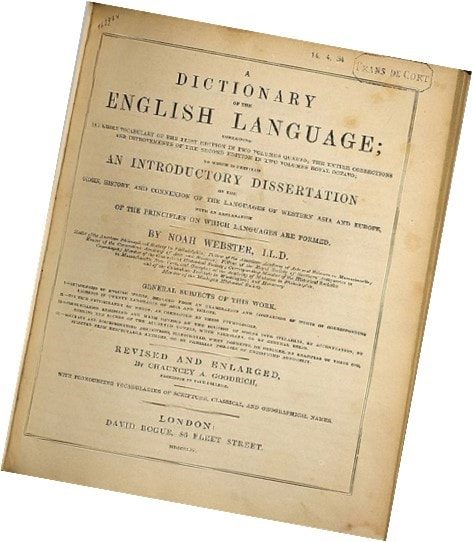
In 1848, Fowler published a book titled, A Home for All “to cheapen and improve human homes and specially to bring comfortable dwellings within the reach of the poorer classes…”. Fowler argued that the octagon shape was more cost effective, used the same amount of building materials as traditional homes and provided more floor space. The house accommodated more windows, which allowed for increased light and air and ultimately benefited health. Fowler also discovered an inexpensive building technique by using gravel, lime and sand to create concrete for molds for the exterior of the house.
Fowler’s book went through several printings as the octagon house design caught on. Octagon houses began to appear all over the country, especially in New York State. At one time, there were over 100 houses. During the spiritualist craze of the 19th century, many spiritualists built octagon houses with the belief that there were no deep corners to harbor evil spirits during their séances. Unfortunately, after the economic panic of 1873, many of these homes fell to ruin, fire, or were torn down. The Prime Octagon House was built in 1859 for Ezra Prime, (1810-1898), a wealthy silversmith and owner of one of the first thimble factories in America, established in 1836. Prime was a member of a prominent Huntington family, being the great - grandson of Ebenezer Prime, (1700-1779), who was minister of the Old First Church from 1719-1779. Prime Octagon House
Prime was a wealthy landowner whose properties included what is now Heckscher Park, and with land extending to both sides of Main Street. His thimble factory was on the corner of Main and Prime, and being a silversmith, he also owned a jewelry store on Main Street, as well as orchards and other farmlands.
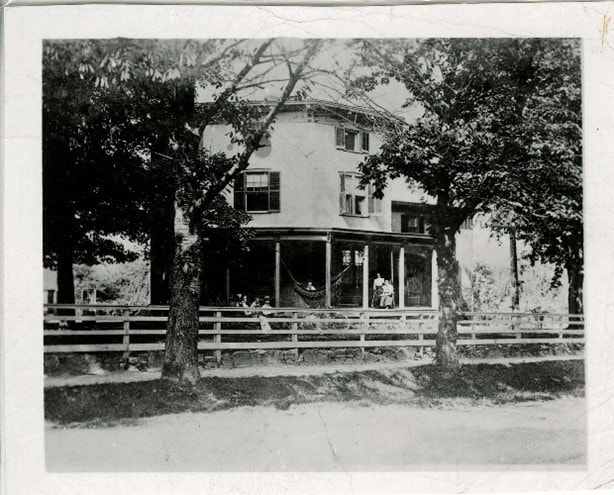
The house is a two-story eight-sided structure with 18-inch stucco walls and a flat roof. It is not known whether Prime lived there himself or rented to his employees. He also built a second octagon house next door on the corner of Lake and Prime Avenue, which was rented out as a boarding house. This house was torn down in 1938 Octagon House on the Corner of Prime Avenue and Lake Street
After Prime's death the house had several owners, but by the 1920s, it fell into disrepair. In 1945, well-known architect John Klaber bought the house and faithfully restored it to Fowler's design concepts. The original porch was removed and replaced by a smaller gable roof entrance porch with columns. A modern garage was connected to the northwest side of the house by a roof breezeway.
The Prime Octagon house intersects with the history of Huntington manufacturing, a prominent Huntington family, and a unique architectural movement. List of remaining octagon houses: Octagon Houses Collection | New York Heritage Fowler’s book still in print: https://www.amazon.com/Octagon-House-Home-All/dp/1626542651
0 Comments
By Barbara LaMonica The man was convented before the court because he was a footpadder.
The man was called before the court because he was a mugger. Economic changes, evolving social norms, urbanization, technological innovations, and political upheavals change word usage over time. For example, in the colonial era the word ear-mark referred to a cut on the ear of a farm animal indicating ownership. Today we earmark to designate funds, or to describe a characteristic such as the earmark of a good novel’s timeless themes. In this case we can see that contemporary usage has eclipsed the original rural meaning.
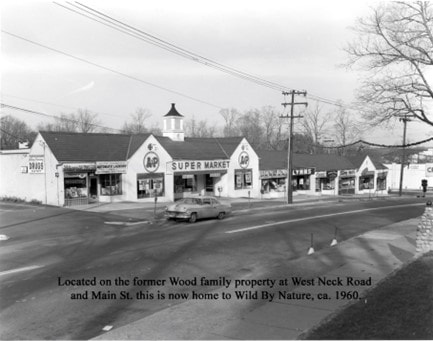
There are many ways a word can change. The definition of a word can be broadened such as the word cloud, a natural atmospheric phenomenon. Its meaning today includes cloud computing or storage of data remotely on information servers “in the cloud”. Conversely, a word can narrow or become more specific over time. For example, the word starve used to mean to die in general, it now means to die from lack of food. In the past the word hound meant any breed of dog. Today it refers to a specific type of hunting dog. Some words evolve from pejorative to positive. In the past if you called someone nice you meant they were foolish or ignorant, today they are pleasant and likeable. Or it could work the other way around, from positive to pejorative. The word bully once meant a sweetheart, but today someone threatening and aggressive. Then some words simply fall out of usage, bodkin and snowbroth come to mind. * Snowbroth?
Familiarity with word or semantic changes are invaluable to early American research, whether you are reading old diaries and letters or studying legal documents. If you are studying an old deed or will you might come across the word enfeoff. Originating in feudal times and still in use in the 18th century, enfeoff means to make a gift of tangible property. Another legal term was Et UX meaning and wife. And if you see the word relic referring to a woman in a diary or on an old tombstone it meant she is/was a widow. Or if someone is a gossip it could mean they are a godparent. In the 18th century mother-in-law was anyone related by marriage including a stepmother. Below are some more examples of early American words no longer in use or whose meanings have changed. Bait- To feed a farm animal Bogue-To walk around Chuffy-To be rude Fishy-To be drunk Gorganize-To have a mesmerizing effect on someone. Macaroni-A man’s fashionable garment (now we can understand “Put a feather in his cap and called it macaroni”) Punk-A prostitute *Bodkin- Sharp pointed instrument, most commonly a dagger. Snowbroth- newly melted snow. By Barbara LaMonica If you grew up during the 60’s or 70’s you probably remember the A&P on Main Street in Huntington. Once a trailblazer for the coming age of supermarkets and big box stores, the Atlantic and Pacific Tea Company is now all but forgotten.
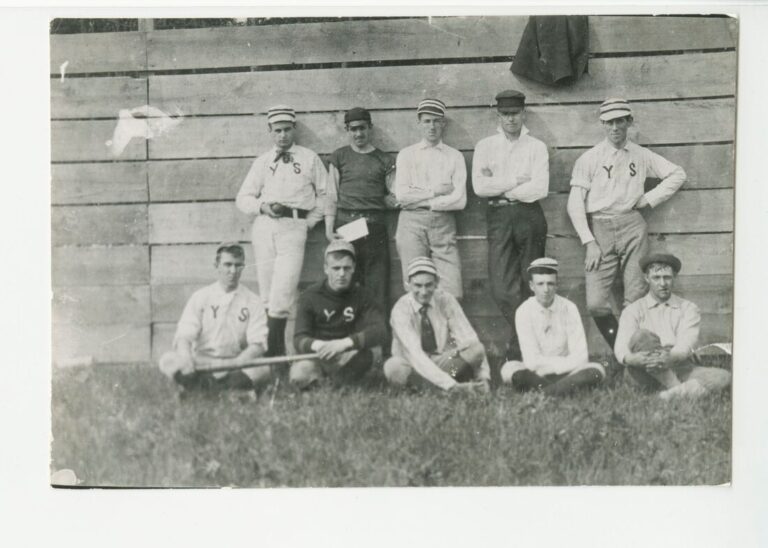
The Atlantic and Pacific Tea Company was founded in 1859 by George Gilman and George Huntington Hartford in New York City. The company originally operated as a wholesaler of tea and coffee, and later opened retail shops in New York City. Eventually the company expanded to include a mail order business, and by 1917 the company grew to over 2,000 nationwide stores which began to also offer meat and produce. Gilman and Hartford were pioneers in retail and marketing concepts, innovations destined to become everyday features of grocery stores such as self-serve, shopping carts and company brand products.
In the 1880s A&P became the first to market its own private labels, most famously the Eight O’ Clock Breakfast Coffee, and in later years Jane Parker Baked Goods and Ann Page Foods. In the 1890s A&P was the first to offer customer loyalty programs giving customers redeeming “checks” for dinnerware and other goods. In 1912 the company introduced the concept of an economy store. This was possible because they operated on only a 12% profit margin, and the popularity of lower prices allowed the company to continue expansion. By the end of WWI, A&P had grown to almost 5,000 stores. In the 1930s A&P expanded into manufacturing, buying up dairies, canning factories and bakeries thus controlling both supply and retail while eliminating wholesalers. They also introduce the “supermarket” self-serve with shopping carts so customers no longer needed a clerk to retrieve items. By 1930 there were 15,000 stores all over the east coast, Midwest and California. Beginning in the early 20th century A&P finally came to Huntington. One of the first stores (below) circa 1910 opened on Main Street. Over the years the store would change locations between Main Street and New York Avenue. In 1939 A&P opened a self-serve supermarket at 337 West Main Street opposite Prospect Street. Self-serve was another A&P retail innovation, as clerks no longer had to retrieve products for customers, since wide aisles placed everything within convenient reach. Local newspapers reported the gala opening. The Suffolk Bulletin of August 8, 1939 effused that “the gala opening was largely attended with great interest aroused by the convenience of shopping in a big market…as an additional convenience are neat little rubber-tired carts so that packages need not be carried on the trip through the store.”
Eventually the store moved to New York Avenue, and then in the 1946 the company purchased property at 369 Main Street, (now Wild By Nature), where it remained until closing in 1982. The 1960s saw the A&P company begin a decline which eventually led to the chain’s final bankruptcy. Several circumstances contributed to the A&P downturn; specifically, failure to contend with competition from big box retailers such as Walmart, and inability to recognize changing consumer preferences. A&P continued to emphasize traditional groceries such as milk, meat and eggs, while consumers were demanding more ethnic and specialty foods, (think Trader Joe’s). A&P was also unable to keep up with big box purchasing power that continued to drive prices down, as well as a failure to modernize with a digital presence and online shopping options. A&P began to shut down stores. Beginning in the 1980s A&P attempted to reassert its dominance over retail grocery by buying up other grocery chains including Waldbaum’s, Food Emporium, and Pathmark. However, the company was ultimately unable to reduce operating costs and debt so they began selling off these stores. More A&P store closures ensued, as the Long Islander reported on February 4, 1982 that the last supermarket in the village would close. Shoppers in the neighborhood were angry as one exclaimed, “The neighbors are all angry about it but what can we do?” Ultimately in 2015 A&P filed for Chapter 11 and finally closed all stores the following year. Ironically the company fell victim to many of the innovations it had initiated that other chains employed and improved upon. by Barbara LaMonica Shortly after the Civil War, baseball’s popularity rapidly spread throughout Long Island. Many towns, including Brooklyn and Queens, (Nassau County was part of Queens until 1899), formed their own baseball clubs. Rival clubs would challenge each other, with many games played at county fairs. Most of the teams consisted of farmers, merchants, and students, although they often had semi-pro players in their lineups.
One of the most famous teams were the Huntington Suffolks. They played for many years under various names including The Huntington Baseball Club, The Young Suffolks, and The Suffolks from Huntington. The person most responsible for fostering baseball’s popularity was Dr. E.T.T. Marsh. Known as the Father of Baseball in Huntington, Dr. Marsh was responsible for the initial construction and management of Huntington Hospital, convincing Cornelia Prime to donate money for its construction. In 1910, his love of baseball led him to manage and finance a winning Huntington team, which played 24 games, winning 6 and losing 8. Through the years, Dr. Marsh continued to promote baseball and cover any deficits the team might incur. by Barbara LaMonica From West Hills to Palm Springs:
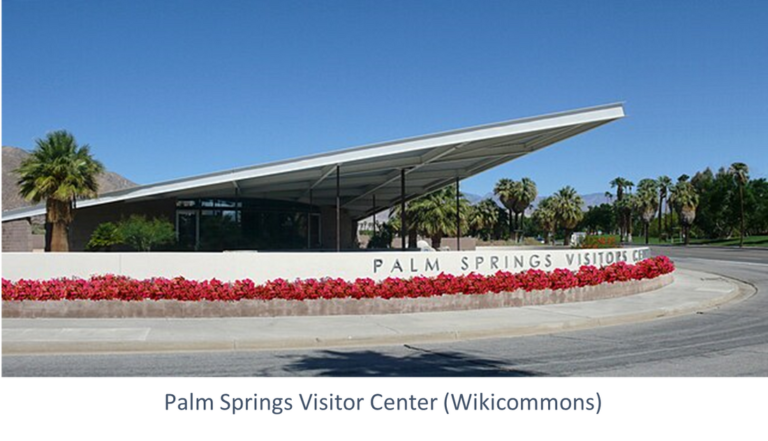
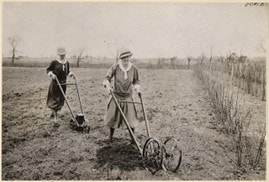
The Journey of the Aluminaire House. Aluminaire House, (Visit Aluminaire House | Palm Springs Art Museum) the first prefab all-metal home, was built in 1931 for an architectural exhibition in New York City. At first it created a sensation, then was ridiculed, sold, forgotten, moved, disassembled, rebuilt as a student project, disassembled again and finally after over 80 years it was reassembled to take a final place of honor at the Palm Springs Art Museum. Inspired by European Modernism, Aluminaire was built by Lawrence Kocher and Swiss architect Albert Frey, who studied under Le Corbusier. The 1,200 square foot 3 story aluminum and steel construction was an experiment in easy to put together affordable housing built with new industrial materials including sheet metal, plate glass, steel beams, and linoleum. The ground floor had a drive through garage with electrically controlled doors, and a dumbwaiter that serviced all three floors. The second floor had the living room, dining room, bedroom, bathroom, exercise room, and kitchen. The living area opened to the third-floor’s 17-foot ceiling. The top floor housed a library and outdoor terrace. The house, which was originally intended to solve the affordable housing issue, was to become a precursor to American Mid-Century Modernist design. After the exhibit the house was taken apart and bought for $1,000 by architect Wallace K. Harrison who rebuilt it on his estate at 140 Round Swamp Road in West Hills. Harrison was a prolific architect also associated with the Modernist tradition. He was responsible for many office buildings and public spaces including Rockefeller Center, the Metropolitan Opera House at Lincoln Center, the United Nations Building and the Empire State Plaza in Albany. Harrison used the Aluminaire house as a guest cottage and expanded it to increase the number of bedrooms. Eventually the Harrison estate was sold a couple of times, first to two art dealers, then in 1984 the property was sold to Dr. Joel Karen who subdivided the property into 2-acre plots with the intent to sell the land to developers. Since Aluminaire was on one of the plots, Dr. Karen applied for a permit to have it demolished, claiming the house had fallen into disrepair and would be too expensive to renovate. This set off a firestorm of debate, as the Harrison estate including Aluminaire, was listed on the National Register of Historic Places. On one side the Huntington Preservation Commission, the Huntington Historical Society and leading architectural professionals claimed Aluminaire was an architectural masterpiece, and on the other side Dr. Karen and his lawyers claimed it was just an ugly tin house resembling an erector set. Finally, Dr. Karen received a permit to demolish the house but instead agreed to donate the house to the New York Institute of Technology Department of Architecture in Central Islip. The house was disassembled and moved to the campus in 1988 where it would be restored as a student project. In 1931 it took an estimated $4,000 to build Aluminaire, but by 1988 it would have cost over $100,000 to restore. With a $131,000 grant from NYS Department of Parks, Recreation and Historic Preservation, the school’s architectural students began restoring the house. With several other grants over the years work in the house continued. But by 2004 NYIT closed the Central Islip campus and eliminated the architectural program. The house was then sold to the non-profit Aluminaire House Foundation whose mission was to again dismantle the house and relocate it to a suitable location. In 2014 an application was made to relocate the house to Sunnyside Gardens, a neighborhood in Queens listed on the National Register of Historic Districts and an official city landmark. Created in the 1920s Sunnyside Gardens was one of the first planned communities in the United States. But the Aluminaire House met with overwhelming opposition from residents who claimed the house was totally out of character with the brick row houses and open spaces of the neighborhood. Once again, the Aluminaire House was looking for a home. Eventually several residents in Palm Springs California recognized the historical significance of the Aluminaire House. Albert Frey had moved to Palm Springs in the 1940s and remained there until his death in 1995 at the age of 98. Collaborating with architect John Porter Clark Frey was responsible for creating the American Mid-Century architectural legacy of the Coachella Valley. So, it was fitting that the Aluminaire’s permanent home should be at the Palm Springs Art Museum. For further reference: Albert Frey: Inventive Modernist | Palm Springs Art Museum (control, click to follow link) Aluminaire House - Alchetron, The Free Social Encyclopedia (control, click to follow link) “The Home of the Future”, Popular Mechanics, August 1931, p. 276-279. https://archive.org/details/PopularMechanics1931/Popular_Mechanics_08_1931/page/n149/mode/2up by Barbara LaMonicaBefore the iconic “Rosie the Riveter” there was another corps of women, widely known at the time, but largely forgotten now, who contributed to an American war effort. The Farmerettes, better known as the Women’s Land Army of America, played a vital role in sustaining American agricultural production during WWI while many farmworkers were fighting overseas, or had taken higher paying jobs in defense factories. The Farmerettes were inspired by the British Land Lassies, a civilian core of women organized to work on farms replacing the men who had been called up to military service. Since in those days farming was not highly mechanized the women provided the extra labor needed to ensure enough harvest to feed the nation. In June 1917 Ida Ogilvie, a geology professor at Barnard College, established the first Women’s Agricultural Camp in Bedford, New York. This was an experimental facility where over a period of 4 months over 100 young women lived together in a camp where they were trained in farming skills such as driving tractors, plowing, planting, and harvesting as well as physical conditioning. The women were then placed on farms, but the farmers had to agree to certain conditions. The Farmerettes, strongly influenced by the Suffrage movement, demanded that the farmers agree to an 8-hour day, and the women had to be paid the same wages as the men. Very progressive for those times! The Bedford camp model was duplicated throughout the United States, and eventually more than 20,000 women were recruited from cities and colleges and placed on rural farms in 25 states. On Long Island most Farmerettes were placed on farms out east including Bridgehampton, Riverhead, and Patchogue. Women working on a farm in East Patchogue. NARA This was not a government program but was established and funded by a group of women’s organizations including garden clubs, women’s colleges, the YWCA, and especially the suffrage societies. Local schools and universities, including Farmingdale Agricultural College on Long Island, provided training. The camps or barracks furnished rooms and board as well as transportation to and from the farms. However, they were unsuccessful in procuring government funding as the Departments of Agriculture and Labor stated that farming should only be performed by men and therefore would not recognize the Women's Land Army. Of course, this was in spite of the fact that women had owned and worked their own farms for years. WWI Poster. Wikicommons At first it was difficult to convince farmers to hire women. But as the reputation of hard- working women and prolific crops spread, waiting lists had to be created. An amusing headline in the Brooklyn Eagle of August 11, 1919, states “Big Spuds Scare L.I. Farmerettes: Potatoes Growing So Big They May Not Be Able to Lift Them.” According to the article farmers were apprehensive that the women would not be able to lift bushels with potatoes twice the size. But their manager assured farmers that the women were “healthy and husky”, and so it seems, as over $500,000 worth of potatoes were shipped from Riverhead and Southold alone. A New York Times headline of September 8, 1918, states, “New York Farmers Break All Records”. According to the article, thanks to the Farmerettes the apple crop was nearly five times that of the year before, and the spring wheat crop was considered the greatest ever. Although most Farmerettes on Long Island worked on large farms on the east end, many of the barracks were throughout the Island including Cold Spring Harbor and Huntington. Women from Brooklyn and Queens were in Cold Spring Harbor. They utilized an historic building on the Jennings estate for administration, and the adjoining casino for sleeping. (Long Islander, August 15, 1919, pg.10). By 6:45 am the first squad of 7-10 women would be transported along with supervisors to a work site, the last squad leaving at 7:45 for farms closer to home base. Fred Allen, whose oral history was recorded by the Huntington Historical Society in 1987, clearly remembers Farmerettes living in Huntington on Park Avenue, probably near the Marsh estate. “Yeah, on 168 Park Avenue. If you go there, the fence is still there, and the big white house is still there. Let me tell you something else, and in my youth next to that estate were the girls. What they call Farmerettes from Brooklyn. And if you go there, they split the houses. There's a house here and a house here. Split it in half. It was that big, all girls. And their property ran from New York Ave way back and it used to be a big oak where they used to go out and sing every night. And where we live, you could hear… they called Campfire Farmerettes, oh yeah, but they were Farmerettes, and they farmed the whole place.” (Interview Fred Allen, December 10, 1987) Eventually Farmerettes became so popular, a straw hat and overalls were a badge of honor as well as a fashion statement, as evidenced by the added below. Brooklyn Eagle, May 11, 1919 Due to the success of the Farmerettes, after the war women began to take farming seriously, and society’s attitude changed. Some women were even offered permanent jobs, such as one woman who eventually managed a dairy farm. Colleges started to offer agricultural courses for women, as one woman stated,
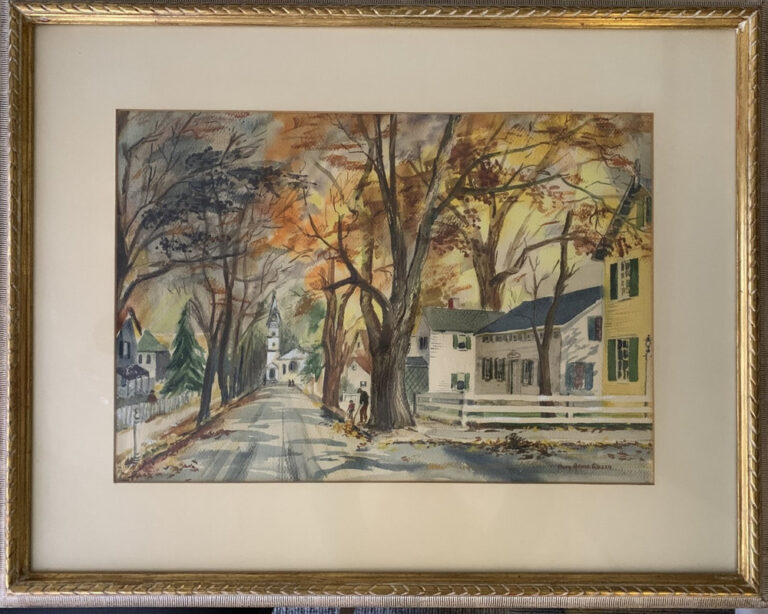
“Men work better when they work alongside women. I am sure the farmer for whom I worked never got so much work out of his boys as when the women came to work among them…the men rather than have the women get ahead of them in any respect kept their work up to the mark better than they had before”. (New York Times, April 13, 1919.) For further reading see: Fruits of Victory the Women’s Land Army of America in the Great War. Elaine Weiss. Washington, D.C: Potomac Books, c2008. by barbara laMonicaThe Huntington Historical Society has just acquired another Helene Glazen, (1898-1987), watercolor entitled “Green Street”, below, which depicts a fall scene of the Huntington street when it was still a residential area. The orientation is looking north toward the old Methodist church on Main Street circa 1950. Helen Glazen, one of the many local artists in our collection was born, nee Townsley, in Little Rock Arkansas in 1898. She graduated from the Cleveland Institute of Art and studied with American watercolorist Elliot O’Hara, and later with world famous artist George Grosz, known for his paintings of social satire. In 1922 she married Carlisle Glazen, an engineer. The couple first moved to Long Island in 1928 and then relocated to Lloyd Harbor in 1945. Her watercolors depict buildings and scenes of Cold Spring Harbor and Huntington making her work of special interest to residents interested in local history. She also did commercial and book illustrations as well as drawn designs for china and crystal. Her work was shown in galleries throughout Long Island including the Stony Brook Art Museum, the Heckscher Museum, and Hofstra University. Ms. Glazen was a member of the DAR and was active in the Huntington Township Art League. She taught adult education classes and also taught at the Huntington Historical Society. Below are other Glazen watercolors in our collection. "Old Conklin Homestead", High Street 1955
by Barbara LaMonica While going through 18th and 19th century deeds in our archives I noticed that some transactions were noted in “pounds, shillings and pence” years after the colonies won their independence from Britain. Was the United States still using British money, and, if so, why?
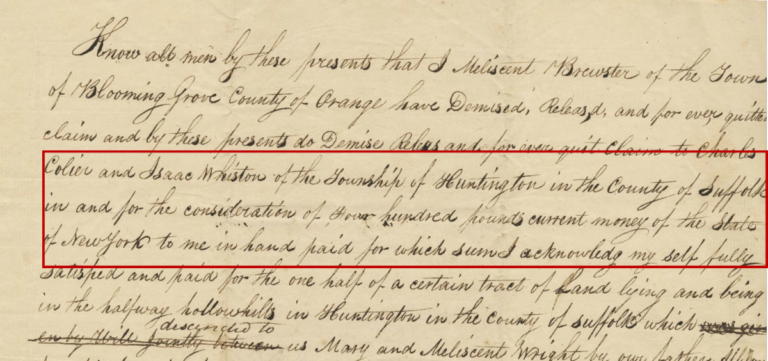
Initially, there was a lack of cash in the colonies, as Britain did not allow the colonists to mint their own money, nor would the mother country export any silver or gold coins. Furthermore, the colonies suffered an unfavorable balance of trade since the goods imported from England exceeded the amount of colonial exports. Therefore, the colonies were forced to improvise methods of currency exchange for domestic as well as international transactions. As independent bodies without a central government or unified money system each of the Thirteen Colonies could establish their own methods of currency and exchange. However, difficulties arose as one colony did not necessarily accept the currency of another colony. For example, in seventeenth century the New England colonies actually used wampum as currency which was often not accepted as payment for goods in the southern colonies, and England rejected Wampum outright as payment for debts. Another method of payment was by barter and commodity currency. Tobacco and corn were accepted as payments but again not across the board. To further confuse the matter, the colonies would convert commodities into money values expressed in British terms- pounds, shillings, pence although there was not actual British currency. But again not every colony would agree. A New York pound may have a different value than a Massachusetts pound or a Pennsylvania pound. Another method was paper money backed by real estate. A colony would issue paper money to an individual who took out the loan backed by real estate collateral. These paper notes circulated freely in the local economy. During the eighteenth century several colonial governments experimented with “fiat money” which was based on faith in the issuing party. However, Britain tried to outlaw this practice by passing Currency Acts which tried to limit use of the bills only for paying taxes. Additionally, the colonies were forbidden from backing the bills with hard coins. Therefore, British creditors would not accept them. Due to colonial trade with the West Indies, Spanish coins of gold and silver were the most prevalent currency in the colonies. The value of these coins was denominated in Colonial shillings, and goods in British pounds, again not real British money but only British terms. And once again the value of the currency often fluctuated from colony to colony. These currency issues which caused the colonies grave economic problems eventually led to the American War of Independence. The Continental Congress then issued their own money, “continentals;” however, many colonies printed too much money causing devaluation. The British further compounded the problem by flooding the colonies with counterfeit continentals. After the American victory states were prohibited from printing their own money, and only the federal government could print and value money. In spite of establishing the US dollar as the national currency at the end of the war, other currencies still circulated, especially Spanish money which still carried British denominations. This type of currency was most typical in rural areas. It was not until the time of the Civil War that the American dollar finally won over other currencies. So our deed of 1811, below, succinctly illustrates this point. The reference to pounds is not British money but a still circulating currency labeled in British denominations. by barbara laMonicaOscar Chudinowsky photo by B. LaMonica According to market analysts the rise of Amazon in 1995 and e-readers in 2007 would cause the demise of brick-and-mortar bookstores due to “technological shock”. And as predicted between 1995 and 2000 the number of independent bookstores declined by 43% as consumers ran to online platforms with unlimited inventory and lower prices. Others predicted with e-readers the printed book would go out of print.
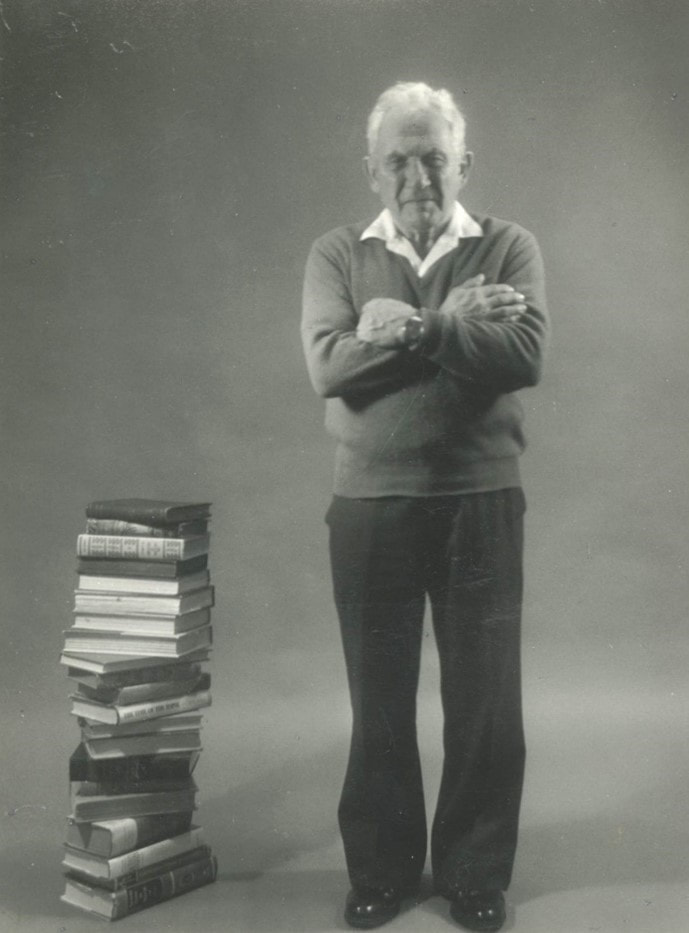
But starting in 2010 against all odds bookstores started to make a resurgence. Furthermore, according to a Harvard Business School study, (Raffaelli, Ryan. “Reinventing Retail: The Novel Resurgence of Independent Bookstores.” Harvard Business School Working Paper, No. 20-068, January 2020), the sale of printed books has been steadily increasing and since 2009, and the number of indie bookstores has increased by 49%. Even a large book retailer like Barnes and Noble are now reopening stores. So what is the appeal of brick and motor stores? Maybe browsing is more fulfilling than scrolling. For a booklover nothing compares with the tactile experience of holding a book and flipping through its pages, and browsing shelves always presents the opportunity of discovering an exciting new title. Bookstores are curatorial in nature providing inventory reflecting the interests of their customers. Algorithms still cannot reproduce the personal buying experience and the expertise of a bookseller. According to market analysts the rise of Amazon in 1995 and e-readers in 2007 would cause the demise of brick-and-mortar bookstores due to “technological shock”. And as predicted between 1995 and 2000 the number of independent bookstores declined by 43% as consumers ran to online platforms with unlimited inventory and lower prices. Others predicted with e-readers the printed book would go out of print. But starting in 2010 against all odds bookstores started to make a resurgence. Furthermore, according to a Harvard Business School study, (Raffaelli, Ryan. “Reinventing Retail: The Novel Resurgence of Independent Bookstores.” Harvard Business School Working Paper, No. 20-068, January 2020), the sale of printed books has been steadily increasing and since 2009, and the number of indie bookstores has increased by 49%. Even a large book retailer like Barnes and Noble are now reopening stores. So what is the appeal of brick and motor stores? Maybe browsing is more fulfilling than scrolling. For a booklover nothing compares with the tactile experience of holding a book and flipping through its pages, and browsing shelves always presents the opportunity of discovering an exciting new title. Bookstores are curatorial in nature providing inventory reflecting the interests of their customers. Algorithms still cannot reproduce the personal buying experience and the expertise of a bookseller. Besides providing a personal buying experience a bookstore is rooted in the community and is a big part of the “shop local” movement supporting the economy of the town. Huntington Village has always had bookstores, at one time boasting several. The oldest, Hunts opened in 1948 at 324 Main Street and closed in the early 1980s, The Little Professor opened in 1974 on Main Street across from the library, concurrently a rare bookstore North Shore Books on Green Street, another used bookstore on New York Avenue, and Book Revue, one of the largest bookstores on Long Island, opened in 1977 and closed in 2021. Today The Next Chapter, which opened in 2023 on New York Avenue is doing a booming business carrying on the tradition of Book Revue. There is one bookstore I have fond memories of and that is Oscar’s Paperback Bookstore where I worked in the mid-1980s while I was in school. Oscar’s Paperback Bookstore opened in 1962 at 389 New York Avenue. Run by Oscar Chudinowsky, a book loving 4-foot 11inch lovable and witty curmudgeon who liked to argue all the “forbidden” topics-religion, politics etc., with his customers. Oscar’s became a haven for authors, artists, academics and students. I hear tell that before my time Jack Kerouac was a recurring presence, and Nobel Laureate scientist Barbara McClintock was a regular customer. With over 75,000 titles including a labyrinth of rare and out-of-print books in the basement, and of course Oscar himself, the store could attract over 200 customers a day. Oscar had the books arranged by publisher and he knew where each book was. “It’s the third aisle, two shelves down, five books to the left” and he would never hesitate to give his opinion- “What do you want to read that for?” Oscar was born in 1907 in Manhattan to Russian immigrants. In 1929 he opened his first bookstore with his wife Ida in Greenwich Village. After that store failed, he tried again in Liberty and Beacon New York, but these also succumbed to the Great Depression. Eventually he opened a toy and gift store in Middle Village Queens which became a great success. By the time he made enough to retire he decided to fulfill his lifelong dream of being a bookseller. After looking around he decided that Huntington was “a good book town”. In later years Oscar sold the store to his longtime employee David Ramage, who eventually closed the store in 1994. Oscar died in his sleep in 1999 at the age of 92. In my mind Oscar’s will always be the epitome of a great indie bookstore. Let’s hope the resurgence continues. By Barbara LaMonica The familiar sight of lamppost wreaths lit up along the streets and Christmas trees dotted with ornaments and strung with lights create a festive atmosphere in businesses and homes. In stores, museums, and online a plethora of ornaments fashioned from glass, metal or plastic depicting everything from super heroes to animals, fruits, baseball teams to designer additions and more are offered. Compared to today Christmases past were simple affairs and the season certainly didn’t last two months! The first Christmas trees originated in Germany in the early 1600s and the ornaments were a few simple handmade ones fashioned from natural items such as dried fruits and nuts. A wave of German immigrants in the early 1800s influenced Americans to celebrate Christmas by decorating trees. Early American ornaments were made of edible items including dried fruit, cranberry garlands as well as “scrap” ornaments made of fabric, wood, tin and paper. The tradition of glass Christmas ornaments also had its beginnings in Germany. In the early 1800s glass ornaments called kugels-meaning ball- were produced by glass blowing families. They were fashioned into delicate designs depicting angels, animals and fruits. By the 1850s these ornaments were exported to England where they first graced the Christmas tree of Prince Albert and Queen Victoria. When a London newspaper published a print of the royal tree it quickly popularized these intricately designed ornaments, at least among the wealthier classes. In 1880 the Woolworth 5 & 10 company was the first American retailer to sell imported German ornaments. A German traveling salesman convinced Frank Woolworth to buy a case of 144 glass ornaments for his Lancaster Pennsylvania store. To Frank’s surprise the ornaments sold out in a day. Obviously Woolworth had a winner. It is estimated that between 1880 and 1939 over 500 million ornaments were sold. In 1939 an enterprising businessman named Max Eckhardt foresaw that imported Christmas ornaments from Germany were to be affected by possible war. So he got together with a representative of Woolworth to convince Corning Glassware of New York to use their machine which were used to make lightbulb to also make glass ornaments. By 1940 Corning was making over 300,000 ornaments a day, most of which were shipped to Eckhardt’s new company Shiny Bright, and the American made ornament business took off. Today Christmas ornaments cover the spectrum of glass, ceramic, homemade as well as cherished family heirlooms. There are also personalized ornaments commemorating births, weddings, anniversaries and vacations, and favorite sports teams and movie heroes. There are interesting stories associated with several ornaments which have retained their popularity over the world. For example, according to legend, the pickle ornament should be the last one hung on the tree, and the child who finds it on Christmas morning will receive an extra gift. The Ukrainian spider web ornament dates back centuries to tell the story about a spider that entered a poor families’ house to enjoy the warmth inside. In appreciation the spider spun a web as a beautiful Christmas decoration which brings good luck. It is thought this may also be the origination of tinsel on a tree.
|
AuthorThis blog has been written by various affiliates of the Huntington Historical Society. Categories
All
Archives
October 2025
|

RSS Feed